

Is your dog’s whining keeping you up at night? Finding the best Collars For Whining Dog means matching the correction type to your pet’s specific sensitivity and size. Automatic collars react to sound, while remote options let you time feedback precisely when vocalization starts.
We’ve broken down ten top choices by their listed features, from citronella spray to dual-channel remotes. This guide helps you compare sensor types, safety locks, and fit ranges so you can pick the right training tool with confidence.
Our Top Picks
| # | Product | ||
|---|---|---|---|
| 1 |  | LIVELYLEAP Citronella Bark Collar Best Citronella Spray | Check Price |
| 2 |  | KJKZO Smart Bark Collar Fastest Response Time | Check Price |
| 3 |  | ELECANE No Shock Collar Best for Small Dogs | Check Price |
| 4 | 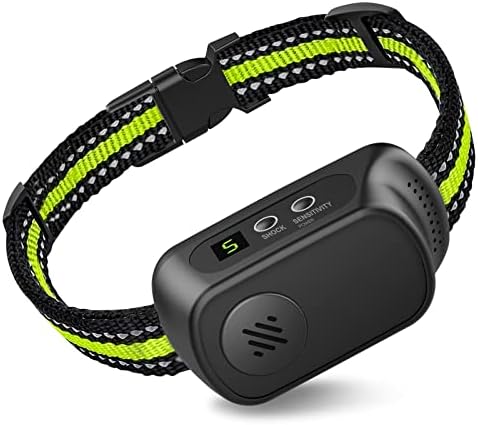 | CZCCWD Rechargeable Bark Collar Most Training Modes | Check Price |
| 5 |  | YUTAANEL Dog Bark Collar Widest Size Range | Check Price |
| 6 |  | CIUZL Dual-Channel Training Collar Best Remote Training | Check Price |
| 7 | 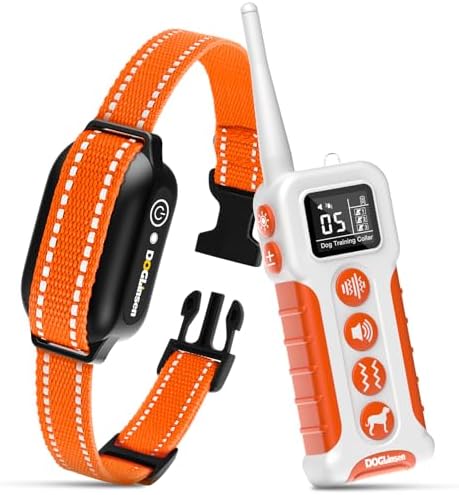 | DOGLinsen No Shock Collar Longest Remote Range | Check Price |
| 8 |  | PATPET Dog Shock Collar Best Waterproof Design | Check Price |
| 9 |  | Bousnic Dual Dog Collar Best Two-Dog System | Check Price |
| 10 |  | DAGANXI Tactical Dog Collar Best Tactical Control | Check Price |
1. LIVELYLEAP Citronella Dog Bark Collar
Best for: Dogs sensitive to physical vibration or shock
This collar uses citronella spray instead of vibration or static correction, which suits dogs that find physical feedback stressful. It includes three spray volume levels and three sensitivity settings, letting you match the output to your dog’s reactivity without guessing. The package comes with a refill bottle and two nylon straps, so you aren’t stuck buying consumables immediately after unboxing.
The smart sensor requires two barks within ten seconds before spraying, reducing false triggers from ambient noise. However, this delay means it won’t correct a single whine instantly, making it less effective for quiet but persistent vocalizers. If your dog is motivated by scent rather than touch, this offers a distinct alternative to standard electronic collars.
Pros
- Includes citronella refill and spare strap
- Three adjustable spray volume levels
- Dual-bark trigger prevents false activation
- IP67 waterproof rating for outdoor use
- Fits neck sizes six to twenty-five inches
Cons
- Delayed response misses single whines
2. KJKZO Smart Bark Collar
Best for: Owners needing instant feedback for rapid escalation
This device claims a 0.1-second response time, addressing the lag that often lets whining turn into full barking fits. It uses dual sensors detecting both sound and vocal cord vibration, which the listing states eliminates most false triggers from background noise. Seven sensitivity levels and three modes allow fine-tuning for dogs that escalate quickly from low whines to loud barks.
A built-in safety pause activates after seven consecutive triggers, preventing over-correction during anxious episodes. This automatic rest period protects sensitive dogs but means continuous whiners might stop receiving feedback mid-session. It’s designed for owners who want automated intervention that reacts faster than human reflexes typically allow.
Pros
- Near-instant 0.1-second response time
- Dual sound and vibration detection sensors
- Auto-pause prevents over-correction safely
- Type-C charging delivers twenty-plus days
- Two-year warranty covers long-term use
Cons
- Safety pause interrupts continuous correction
- Lightweight build may not suit rough play
3. ELECANE No Shock Collar
Best for: Small breeds under forty pounds
Designed specifically for dogs eight to forty pounds, this collar avoids the bulk that overwhelms small necks. It offers beep, vibration, and combination modes with five sensitivity levels, giving tiny dogs appropriate feedback without excessive intensity. The AI chip targets bark-specific frequencies, helping prevent activation from high-pitched whines or environmental sounds that often fool generic sensors.
Magnetic charging eliminates fiddly ports that collect dirt or moisture during daily wear. While ideal for petite breeds, the weight limit excludes medium dogs over forty pounds entirely. This focused sizing ensures comfort for Dachshunds and French Bulldogs but isn’t a versatile option for multi-dog households with varying sizes.
Pros
- Sized specifically for eight-to-forty-pound dogs
- Magnetic charging prevents port damage
- AI chip filters non-bark audio triggers
- Ultra-light design ensures all-day comfort
- IP67 waterproof rating withstands rain
Cons
- Limited sensitivity range for stubborn dogs
4. CZCCWD Rechargeable Bark Collar
Best for: Owners wanting multiple correction options
This collar provides four training modes including static shock, offering more escalation steps than vibration-only models. Five sensitivity levels and dual activation (sound plus throat vibration) help distinguish real whining from passing cars or other dogs. An LED display shows battery life and working status in real time, removing guesswork about whether the unit is actually active.
The protective pause mode engages after consecutive triggers to avoid overwhelming anxious dogs. While versatile, the inclusion of shock means it’s not suitable for owners committed to force-free methods. It serves handlers who need graduated correction levels but still want built-in safeguards against accidental overuse.
Pros
- Four modes including adjustable static shock
- LED display shows real-time operational status
- Dual activation reduces false positive triggers
- Protective pause prevents over-stimulation
Cons
- Shock mode unsuitable for force-free training
- Bulkier design may discomfort tiny breeds
5. Dog Bark Collar for Large Medium Small Dogs 8-150lbs 1Pack
Best for: Multi-size households with varied bark pitches
With eight sensitivity levels, this collar offers finer granularity than most competitors for tuning to different vocal ranges. Levels one through three target deep barks, while seven and eight catch light whines, making it adaptable across breeds. The dual induction technology monitors both sound and throat vibration to filter ambient noise effectively.
A unique 2-in-1 leash attachment point reduces gear clutter during walks for small-to-medium dogs. However, the listing notes it’s primarily optimized for dogs under one hundred fifty pounds despite the broad claim. This hybrid function appeals to minimalists but shouldn’t replace a dedicated leash for strong pullers.
Pros
- Eight sensitivity levels for precise tuning
- Integrated leash attachment reduces gear bulk
- Dual induction filters environmental noise accurately
- Fast 1.5-hour charge lasts weeks
Cons
- Leash function unsafe for strong pullers
- Sensitivity tuning requires trial and error
6. CIUZL Dual-Channel Training Collar
Best for: Training a pair of dogs simultaneously with remote
This system controls a pair of receivers independently via one remote, eliminating the need to carry separate devices for each dog. Three modes (beep, vibration, safe shock) with adjustable levels let you tailor feedback to each dog’s temperament in real time. The 3300-foot range supports off-leash training in large yards or open fields where whining often escalates.
A safety lock prevents accidental button presses, crucial when managing multiple dogs in dynamic environments. Since it’s remote-operated, it won’t auto-correct whining when you’re absent or distracted. This suits hands-on trainers who want precise timing but requires constant user engagement to be effective.
Pros
- Controls a pair of dogs independently via one remote
- Safety lock prevents accidental activation
- 3300-foot range covers large training areas
- Built-in light aids nighttime visibility
- IPX7 waterproof rating handles wet conditions
Cons
- Requires constant manual operation
- No automatic bark detection feature
7. DOGLinsen No Shock Dog Training Collar with Remote 3300ft Range
Best for: Force-free trainers needing extended range
Offering nine tone and vibration combinations without shock, this collar prioritizes humane communication over aversive correction. The removable antenna extends range to 3300 feet, matching many shock collars’ distance while staying force-free. Three channels allow training up to three dogs sequentially, adding flexibility for growing households.
No-prong receiver design prevents neck irritation during extended wear sessions. However, the absence of static correction may limit effectiveness for dogs unresponsive to vibration alone. It’s built for committed positive-reinforcement trainers who refuse shock but still need reliable long-distance signaling.
Pros
- Nine tone/vibration combos without shock
- Removable antenna extends to 3300 feet
- No-prong design prevents skin irritation
- Supports three channels for multiple dogs
- Ninety-day remote standby reduces charging
Cons
- Lacks static option for stubborn dogs
- Vibration-only may fail for some temperaments
8. PATPET Dog Shock Collar with Remote
Best for: Water-loving dogs needing durable waterproofing
Rated IPX7 waterproof, this receiver withstands submersion during swimming or heavy rain without failure. Sixteen static levels provide wide adjustment range for dogs requiring varied intensity settings. A security keypad lock prevents unintended shocks when the remote is pocketed or dropped during active outdoor sessions.
The receiver suits dogs ten to one-forty pounds, covering most working and sporting breeds comfortably. Non-adjustable vibration limits customization compared to fully modular systems. It’s optimized for aquatic environments where moisture resistance matters more than granular mode variety.
Pros
- IPX7 rating survives swimming and rain
- Sixteen static levels prevent habituation
- Keypad lock prevents accidental shocks
- Sixty-day remote battery reduces downtime
- Lightweight receiver minimizes neck strain
Cons
- Vibration level isn’t adjustable
- Upper weight limit excludes giant breeds
9. Bousnic Dog Shock Collar 2 Dogs (5-120Lbs)
Best for: Handlers managing a pair of dogs with different temperaments
This kit includes a pair of receivers with independent channel control, allowing customized correction levels for each dog without swapping settings. Ninety-nine shock levels offer extreme precision for fine-tuning responses between sensitive and stubborn dogs. The through-wall antenna maintains signal integrity indoors, where whining often occurs near bedrooms or kitchens.
Hermetic sealing enables swimming and stream trekking without water damage. Note that this is strictly remote-operated; it won’t auto-correct whining when unattended. Ideal for experienced handlers managing paired dogs with divergent thresholds, but demands active participation.
Pros
- Independent dual-channel control for a pair of dogs
- Ninety-nine shock levels enable micro-adjustments
- Through-wall antenna works reliably indoors
- Hermetic seal allows full submersion safely
- Fifteen-to-sixty-day battery life varies by use
Cons
- Remote-only operation requires constant attention
- High shock range risks misuse by novices
10. DAGANXI Tactical Dog Collar
Best for: Large dogs needing physical handling control
Built from 1000D nylon with padded lining, this collar prioritizes durability and comfort over electronic correction. A reinforced control handle allows immediate physical guidance during whining episodes linked to leash reactivity or excitement. The integrated AirTag case and Velcro patches support identification and tracking during outdoor adventures.
Quick-release metal clasp provides emergency detachment if the collar snags on brush or equipment. Unlike electronic options, it offers no automated or remote feedback for vocalization. It’s a management tool for strong dogs whose whining stems from poor leash manners rather than anxiety.
Pros
- 1000D nylon withstands heavy pulling forces
- Padded inner protects neck during handling
- Control handle enables instant physical guidance
- Quick-release clasp prevents snagging hazards
- AirTag case integrates tracking seamlessly
Cons
- No electronic correction for vocalization
- Manual handling required for every intervention
Best Collars for Whining Dogs
Correction Type Matters Most
Whining stems from different causes than barking, so correction type dictates success. Citronella or vibration suits anxiety-driven whiners, while static may address demand-based vocalization. Match the stimulus to your dog’s motivation, not just the decibel level, to avoid worsening stress-related behaviors.
Sensor Accuracy Prevents Frustration
False triggers erode trust and confuse dogs. Look for dual-sensor technology combining sound and throat vibration to distinguish whining from ambient noise. Single-microphone collars often activate incorrectly, teaching dogs that random events cause discomfort rather than linking feedback to their own vocalizations.
Size and Weight Compatibility
A collar too heavy causes neck strain; one too loose fails to detect vibrations. Check listed weight and neck ranges against your dog’s measurements, not breed averages. Whining dogs often have slender necks or delicate tracheas, making proper fit critical for both safety and sensor contact.
Safety Features Are Non-Negotiable
Anxious whiners may vocalize continuously, risking over-correction. Prioritize collars with automatic pause modes or safety locks that interrupt feedback cycles. These safeguards prevent escalation loops where distress triggers more correction, which then fuels further distress and vocalization.
Remote Versus Automatic Operation
Automatic collars work when you’re absent but lack contextual judgment. Remote systems let you time feedback precisely to the whine’s onset, reinforcing quiet moments instead of just punishing noise. Choose based on whether whining happens primarily when supervised or during alone time.
Narrow your choice by identifying your dog’s primary whining trigger, your preferred training philosophy, and the environments where intervention is needed most. Match capability to context, not just feature count, to find a tool that supports lasting behavioral change.
Common Buying Mistakes to Avoid
Ignoring Whine-Specific Sensitivity
Many collars are calibrated for barks, not higher-pitched whines. Buying without checking adjustable sensitivity ranges leads to devices that either ignore soft vocalizations or overreact to normal sounds. Verify the collar explicitly mentions whine detection or offers granular low-end sensitivity settings.
Overlooking Safety Pause Mechanisms
Whining can be compulsive, triggering endless correction cycles. Skipping collars without auto-pause features risks creating anxiety spirals that worsen the original problem. Always confirm a rest mode exists, especially for dogs with separation anxiety or medical causes of vocalization.
Choosing Wrong Correction Modality
Using shock on fear-based whining amplifies distress. Selecting correction type without diagnosing cause turns manageable behavior into trauma. Consult a trainer first to determine if your dog needs reassurance, redirection, or aversive feedback before purchasing any electronic device.
Misjudging Fit for Vocal Detection
Throat vibration sensors require consistent skin contact. Buying based on neck circumference alone ignores fur thickness or trachea shape, causing missed detections. Measure with fur compressed and verify sensor placement aligns with your dog’s vocal cord position for reliable activation.
Assuming Automation Equals Effectiveness
Automatic collars can’t distinguish distressed whining from alert vocalization. Relying solely on auto-detection without supervision may suppress important communication signals. Use automatic modes only after establishing baseline understanding of your dog’s vocal patterns through direct observation.
Avoid these pitfalls by prioritizing whine-specific design, safety safeguards, and cause-appropriate correction over generic bark-collar specs. The right tool addresses the root behavior, not just the symptom, ensuring welfare and training progress align.
FAQ
Can bark collars detect whining versus barking?
Some collars with dual sensors and adjustable sensitivity can distinguish whining from barking by analyzing pitch and throat vibration patterns. However, many are calibrated primarily for louder barks and may miss softer whines unless specifically designed or tuned for higher-frequency vocalizations.
Is citronella spray safe for anxious whiners?
Citronella is generally considered less aversive than shock or vibration for anxiety-driven vocalization since it startles without physical discomfort. However, scent-sensitive dogs may find it stressful, so monitor reactions closely and discontinue if signs of increased anxiety appear.
Do remote collars work better for whining than automatic ones?
Remote collars allow precise timing of feedback to the exact moment whining starts, which helps dogs associate quietness with reward. Automatic collars risk delayed or misplaced correction, potentially confusing dogs about which behavior triggered the response, especially for intermittent whining.
What weight range should I prioritize for small whining dogs?
Choose collars explicitly rated for your dog’s current weight, not projected adult size, since sensor calibration depends on mass. Collars designed for 8-40 lbs typically have lighter receivers and finer sensitivity adjustments suited to small breeds’ higher-pitched whines and delicate necks.
How do safety pause modes protect whining dogs?
Safety pauses automatically stop correction after consecutive triggers, preventing overstimulation during anxiety episodes or compulsive vocalization loops. This safeguard ensures the collar doesn’t escalate distress, giving the dog recovery time and protecting against misuse during unsupervised periods.
Conclusion
Selecting the right collar hinges on matching correction type, sensor accuracy, and safety features to your dog’s specific whining triggers and temperament. Prioritize welfare-aligned design over feature density to ensure the tool supports behavioral progress without compromising trust or well-being.