
Looking for the best krill oils for dogs? You’re choosing between liquid pumps, softgels, and chews. What separates them is how they deliver omega-3s and what else goes in the bottle. Some use just one ingredient, while others add joint support or flavor so your dog actually eats it.
Here is a breakdown of the options to help you pick the right fit. Read on to see what each product brings to your dog’s bowl and which one matches their needs.
Our Top Picks
| # | Product | ||
|---|---|---|---|
| 1 |  | Grizzly Wild Krill Oil Best Overall | Check Price |
| 2 |  | kril Antarctic Krill Oil Best Liquid Absorption | Check Price |
| 3 |  | Herbsmith Pure Krill Best Single Ingredient | Check Price |
| 4 | 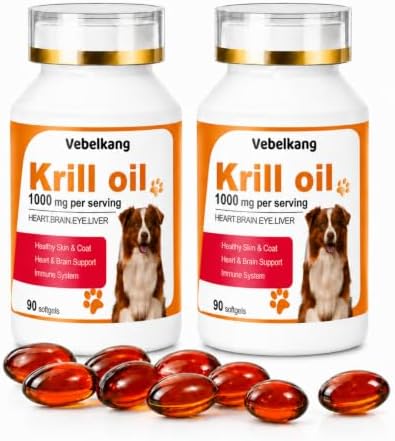 | Vebelkang Krill Oil 180 Best Softgel | Check Price |
| 5 |  | Animal Pharmaceuticals Krillex Best Joint Support | Check Price |
| 6 |  | Guardian's Choice Krill Chews Best Omega Chews | Check Price |
| 7 |  | Dr Bark & Whiskers Krill Best Krill Bites | Check Price |
| 8 |  | Wholistic Pet Organics Krill Best for Cats and Dogs | Check Price |
1. Grizzly Wild Antarctic Krill Oil All-Natural Antioxidant Dog Food Supplement
Best for: Owners wanting exact pump dosing daily.
This oil comes from Antarctic krill and carries high levels of astaxanthin, which gives it a deep red color. The listing states it holds up to eight times more astaxanthin than human versions. That means a strong antioxidant dose lands directly in your dog’s bowl every time you press the top.
Grizzly built this formula under a biochemical engineer with over sixteen years of experience. Each batch goes through third-party lab testing before it ships. The bottle uses an air-tight medical grade pump that measures servings exactly, so you don’t have to guess.
Pros
- Up to eight times more astaxanthin included.
- Every batch passes third-party lab testing.
Cons
- Liquid format requires mixing into food.
2. kril™ Antarctic Krill Oil Liquid Supplement
Best for: Dogs needing fast liquid supplement absorption.
This liquid uses MSC-certified Antarctic krill with no fillers or dilution added. A board-certified veterinarian formulated it, and it carries the NASC Quality Seal. Because it absorbs directly into the bloodstream, the listing notes it works up to three times better than standard fish oil.
Astaxanthin is built right into the oil itself to protect its freshness. It comes in an inert glass bottle instead of plastic, paired with an easy dropper for precise dosing. One bottle lasts up to four months, and krill oil absorbs directly into the bloodstream. It doesn’t suit buyers who want a chewable treat their dog can eat like a snack.
Pros
- Bottled in inert glass rather than plastic.
- Dropper allows precise and spill-free dosing.
- Absorbs up to three times better.
Cons
- one bottle lasts up to four months, so a multi-pet household needs more bottles
3. Herbsmith Pure Krill
Best for: Owners wanting only one whole ingredient.
Herbsmith Pure Krill contains just one ingredient: wild-caught Antarctic krill. It delivers phospholipids that efficiently carry omega-3s into your dog’s system. It also provides choline, which supports normal brain, heart, and liver function when fed daily.
A holistic veterinarian with over thirty years of experience recommends this specific formula. It’s made in Wisconsin at a GMP-certified facility and sourced from an MSC-certified fishery. The listing states it stays stable much longer than liquid oils that go rancid quickly.
Pros
- Contains nothing but a single whole natural source.
- Stays stable longer than liquid krill oil.
- Sourced from an MSC-certified sustainable fishery.
Cons
- ready-to-use omega 3s for dogs, so cats are left out
4. Vebelkang Krill Oil Omega 3 Supplement
Best for: Dogs sensitive to messy liquid oils.
These softgels deliver omega-3 EPA and DHA bound to phospholipids for efficient use. They include naturally occurring astaxanthin for antioxidant support alongside choline for daily wellness. The pre-measured capsules mean you get a consistent serving without ever dealing with greasy pumps or strong odors.
The listing highlights support for seasonal skin comfort and healthy shedding patterns. They also aim to maintain joint mobility in adult and senior dogs of all breeds. You simply give the capsule whole or hide it in a meal.
Pros
- Pre-measured softgels prevent messy oil spills.
- Supports seasonal skin comfort and itch relief.
- Delivers EPA and DHA in phospholipid form.
Cons
- 180 softgels in the box, so a longer regimen means buying another bottle
5. Animal Pharmaceuticals Krillex Joint Formula & Omega 3 Krill Oil
Best for: Senior dogs needing advanced joint support.
Krillex combines Antarctic krill oil with glucosamine, chondroitin, MSM, and hyaluronic acid. This blend targets joint structure and fluid resistance as your pet ages. The Rimoxen formula helps manage normal inflammation and stiffness to keep older dogs moving comfortably.
Veterinarians formulated these cheese-flavored chews specifically for safety and daily efficacy. The krill oil inside offers improved bioavailability compared to standard sources to nourish joint tissues. They’re made in the USA for both dogs and cats needing mobility help. Pick this one if your dog needs combined omega-3 and joint support.
Pros
- Includes glucosamine, chondroitin, and MSM.
- Cheese flavor makes daily dosing very easy.
- Hyaluronic acid replenishes essential joint fluid.
Cons
- Focused heavily on joints over basic omegas.
6. Guardian’s Choice Krill Chews
Best for: Active dogs needing daily omega chews.
These soft chews mix fish oil and krill oil together to provide EPA and DHA. They target itchy skin, seasonal irritation, and excessive shedding all at once. The chicken flavor means most dogs eat them willingly without you having to hide anything in their food bowl.
The formula also supports hips and joints for puppies, adults, and senior dogs alike. You get a 90-count supply designed for convenient daily use. It covers skin, coat, and mobility in one simple step. It won’t suit owners who strictly want pure krill oil without any added fish oil blends.
Pros
- Chicken flavor encourages willing daily eating.
- Combines fish oil and krill oil together.
Cons
- Blends fish oil rather than pure krill.
7. Dr Bark & Whiskers Krill
Best for: Owners avoiding artificial fillers and grains.
Bark & Whiskers Krill Bites use sustainably sourced Antarctic krill oil rich in DHA and EPA. They support cellular health, brain function, and immune system balance. The formula is non-GMO, gluten-free, and completely free of grains or synthetic ingredients.
Instead of gelatin, these bites rely on natural softeners like coconut glycerin, sunflower lecithin, and MCT oil. Veterinarians formulated them to nourish dogs and cats from the inside out. They stay low in carbohydrates while delivering clean omega-3s.
Pros
- Uses coconut glycerin instead of harsh gelatin.
- Non-GMO and completely free of grains.
- Supports brain and immune system balance.
Cons
- Only sixty chews per bag supplied.
8. Wholistic Pet Organics Krill
Best for: Households feeding both cats and dogs.
These soft gels pack omega-3s, vitamins A and E, DHA, EPA, and astaxanthin into a single capsule. They aim to support a shiny coat, normal vision, and heart health. You can give them whole as a treat or puncture them to squeeze the oil directly over food.
They serve as a gentle alternative for pets sensitive to regular fish or salmon oils. The product is NASC certified and made entirely in the USA. The company backs it with a promise to make things right if you aren’t happy after ninety days.
Pros
- Can be given whole or squeezed out.
- Backed by a ninety-day satisfaction promise.
- Carries NASC certification for quality assurance.
Cons
- Sixty soft gels require frequent reordering.
Hanzi Pets Soft Chews Dogs offers a cGMP-certified option made in the USA. It focuses on low-allergen, low-calorie delivery of astaxanthin and vitamin E alongside omega-3s for skin and coat care.
Pet Vitamin Co provides shed-free soft chews aimed at reducing itching and improving the coat. Like others, it’s made in the USA and relies on antioxidants and omega-3s to support overall skin health.
Alpha Dog Krill Oil Dogs targets allergies, itchiness, and shedding to promote a healthy coat. It frames its formula around restoring daily vitality for dogs dealing with seasonal skin discomfort.
Choosing Krill Oil for Dogs
Form and Delivery
Krill oil comes as liquids, softgels, powders, or chews. Liquids mix into food but can spill. Softgels give exact amounts without mess. Chews taste good but add extra ingredients. Pick the form your dog accepts easily every single day.
Ingredient Purity
Some products use pure krill alone, while others blend in fish oil or joint compounds. If your dog has food sensitivities, a single-ingredient powder avoids hidden triggers. Blended chews offer support but introduce more variables. Check the label closely to match your dog’s dietary needs.
Antioxidant Content
Astaxanthin protects the oil from going rancid and acts as an antioxidant inside the body. Listings state different concentrations across brands. Higher astaxanthin levels keep the oil fresher in the bottle. It also supports your dog’s cells against daily stress.
Certifications and Testing
Look for MSC certification to ensure the krill was harvested sustainably. The NASC Quality Seal shows a brand meets strict manufacturing standards. Third-party lab testing confirms what’s printed on the label is actually inside the bottle. These marks separate careful brands from careless ones.
Target Health Goals
Decide if you need basic skin and coat support or deeper joint care. Basic oils handle shedding and dry skin well. Formulas adding glucosamine or hyaluronic acid target aging joints instead. Match the supplement’s focus to the specific problem your dog faces today.
Narrow your choice by looking at how you feed your dog daily. If they hate pills, skip softgels and try flavored chews or liquids. Focus on the exact health goal you want to reach, then check the certifications to confirm the product is built safely.
Mistakes to Avoid When Buying Krill Oil
Ignoring the Delivery Format
Buyers often grab whatever looks easiest without thinking about daily use. A pump bottle gets messy if your dog knocks bowls over. Softgels fail if your dog spits out pills. Always choose the format that fits your actual feeding routine.
Overlooking Added Ingredients
Many assume all krill supplements are identical. Some include fish oil, grains, or synthetic binders. If your dog has allergies, those extras cause flare-ups. Read the full ingredient list to ensure nothing conflicts with your dog’s dietary limits.
Confusing General Wellness With Joint Care
Owners sometimes buy basic oil expecting it to fix severe limping. Plain omega-3s support coats and mild inflammation. Real joint decline needs added glucosamine, MSM, or hyaluronic acid. Don’t expect a simple oil to do a complex formula’s job.
Skipping Sustainability Marks
Harvesting krill poorly harms ocean ecosystems. Buyers often miss the MSC certification on the label. Without it, you can’t verify the source is responsibly managed. Always look for recognized sustainability seals before purchasing.
Misunderstanding Storage Needs
Liquid oils break down when exposed to air or heat. Buyers leave pump bottles open or store them in warm spots. Glass bottles and air-tight pumps prevent this spoilage. Follow the storage directions so the astaxanthin keeps working properly.
Keep these mistakes in mind before clicking the buy button. Check the format, read the full ingredient list, and match the product to your dog’s real physical needs. Verify the sustainability marks and plan where you’ll store the bottle at home.
FAQ
Is krill oil safe for all dogs?
Most dogs handle krill oil well when given the correct serving size. However, dogs on blood-thinning medications should see a vet first. Always start with a smaller amount to watch for stomach upset.
How is krill oil different from fish oil?
Krill oil binds omega-3s to phospholipids instead of triglycerides. This structure allows the body to absorb it more efficiently. It also naturally contains astaxanthin, which fish oil lacks.
Can I give my dog human krill oil?
Human formulas might contain different concentrations or added flavors unsafe for pets. Products made specifically for dogs follow veterinary guidelines. Stick to pet-formulated versions to avoid accidental overdosing.
How long until I see results on my dog’s coat?
Most owners notice softer fur and less shedding after three to six weeks. Consistency matters more than the serving size. Keep giving it daily for the best long-term skin support.
Does krill oil need refrigeration?
It depends on the format and packaging. Glass bottles with natural astaxanthin stay fresh longer at room temperature. Always check the specific brand’s label for their storage instructions.
Will my dog smell fishy after taking it?
High-quality krill oil usually carries little to no odor. Many listings specifically note the absence of a fishy smell.
Conclusion
The best krill oils for dogs depend entirely on how you feed your pet and what their body needs most. Liquids offer fast absorption, while softgels and chews remove the mess of daily dosing. Look closely at the ingredient list, check for trusted certifications, and match the formula to your dog’s specific health goals.